The storyline · Seven scenes
Why receiving a signal and redistributing it are different.
The path from broadcast content to a licensing obligation, followed step by step. No hypothetical vessels and no invented disputes; this is the actual flow of content and rights.
What a television channel contains.
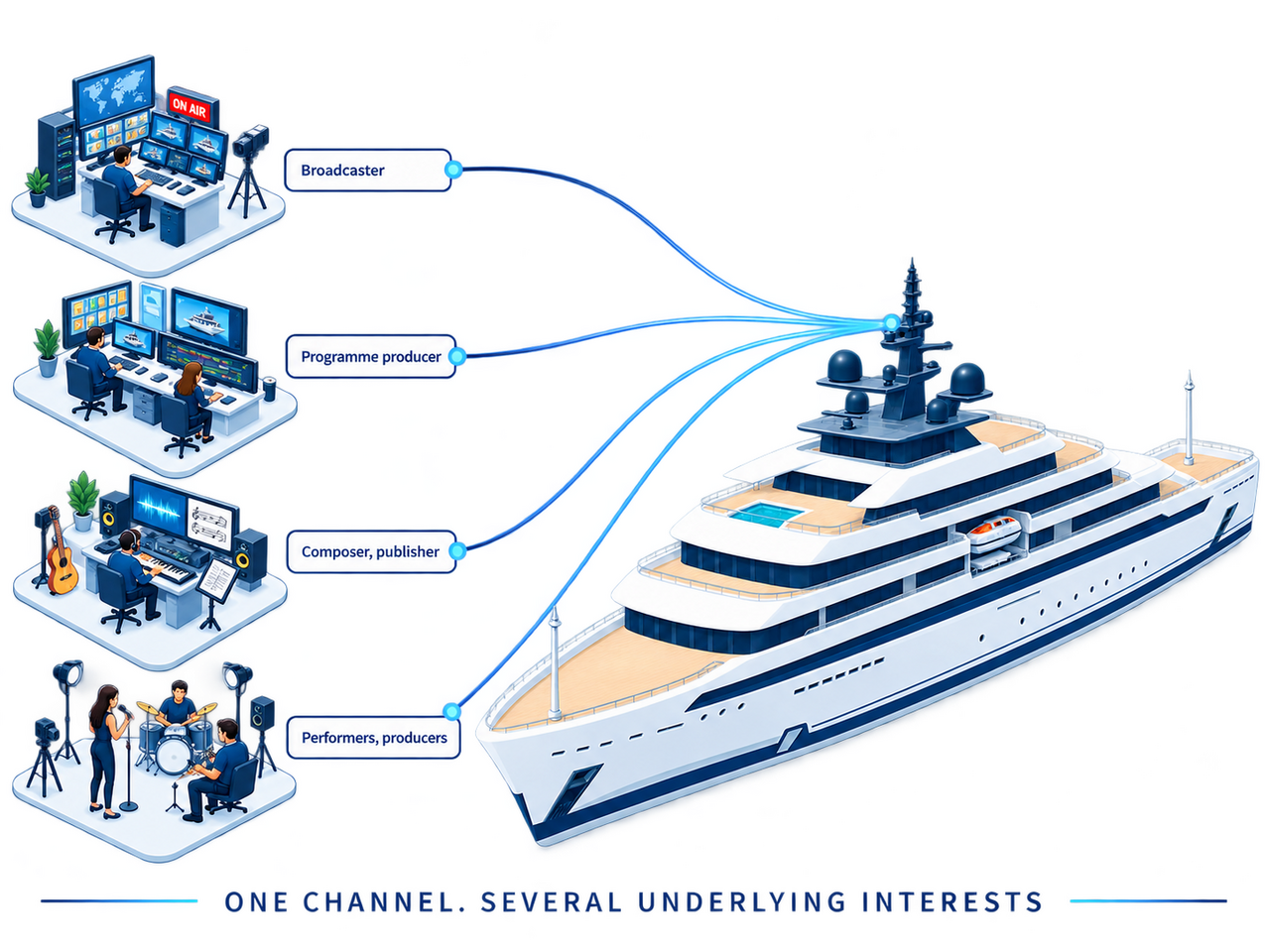
A channel is an assembly of rights. The programmes carry producers’ audiovisual rights. The music inside them carries composers’ and publishers’ rights. Performances and recordings carry neighbouring rights where applicable. And the broadcaster holds rights in its own transmission. One channel, several underlying interests.
What the vessel has purchased.
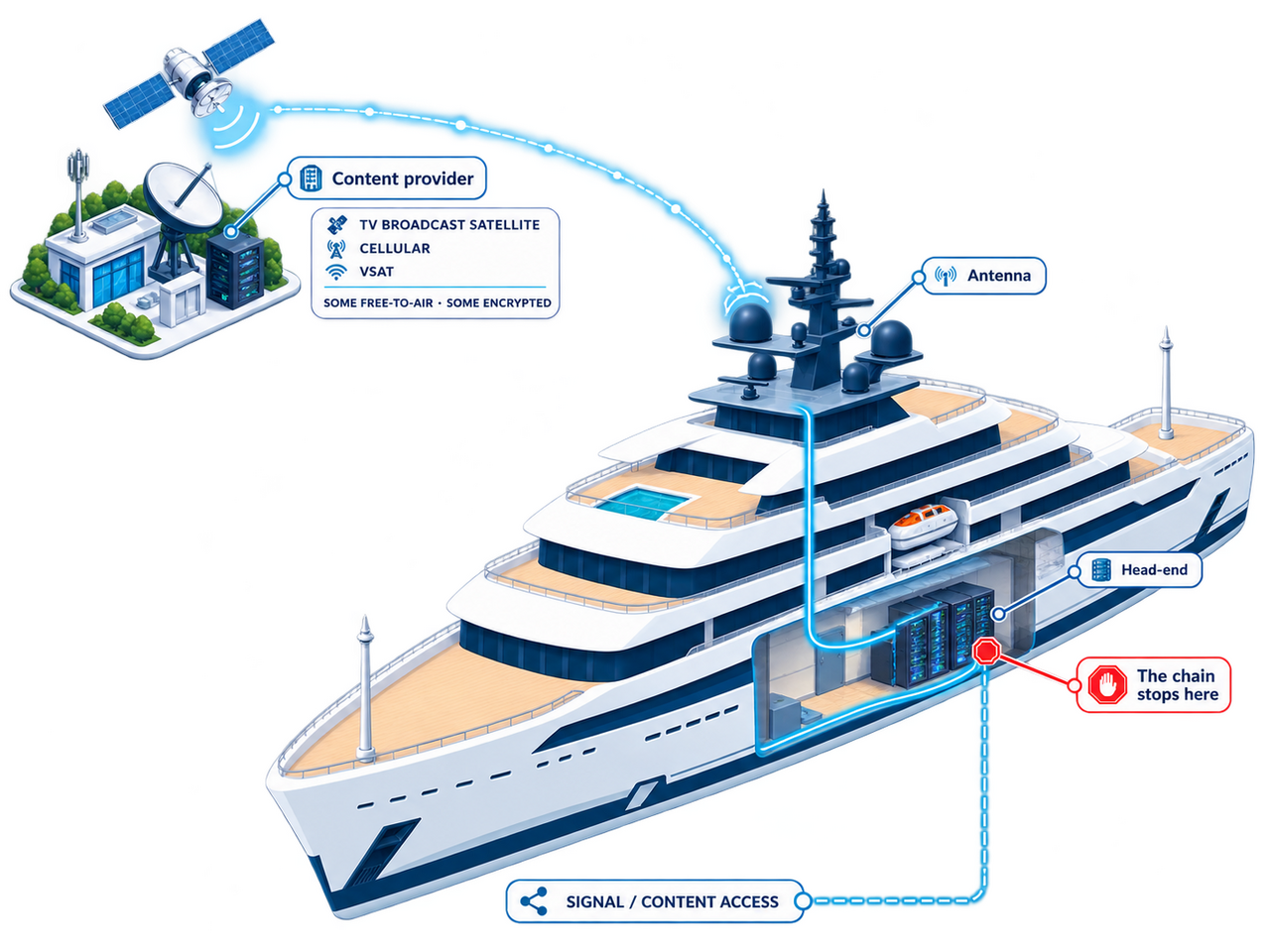
The vessel purchased a system that receives content via TV broadcast satellite, Cellular or VSAT. Some of these are Free-to-Air, some are encrypted. That is signal and content access. It is where the supplier’s delivery obligation ends, and in the agreements Clara has reviewed, it is typically where the granted rights end as well.
What changes onboard.
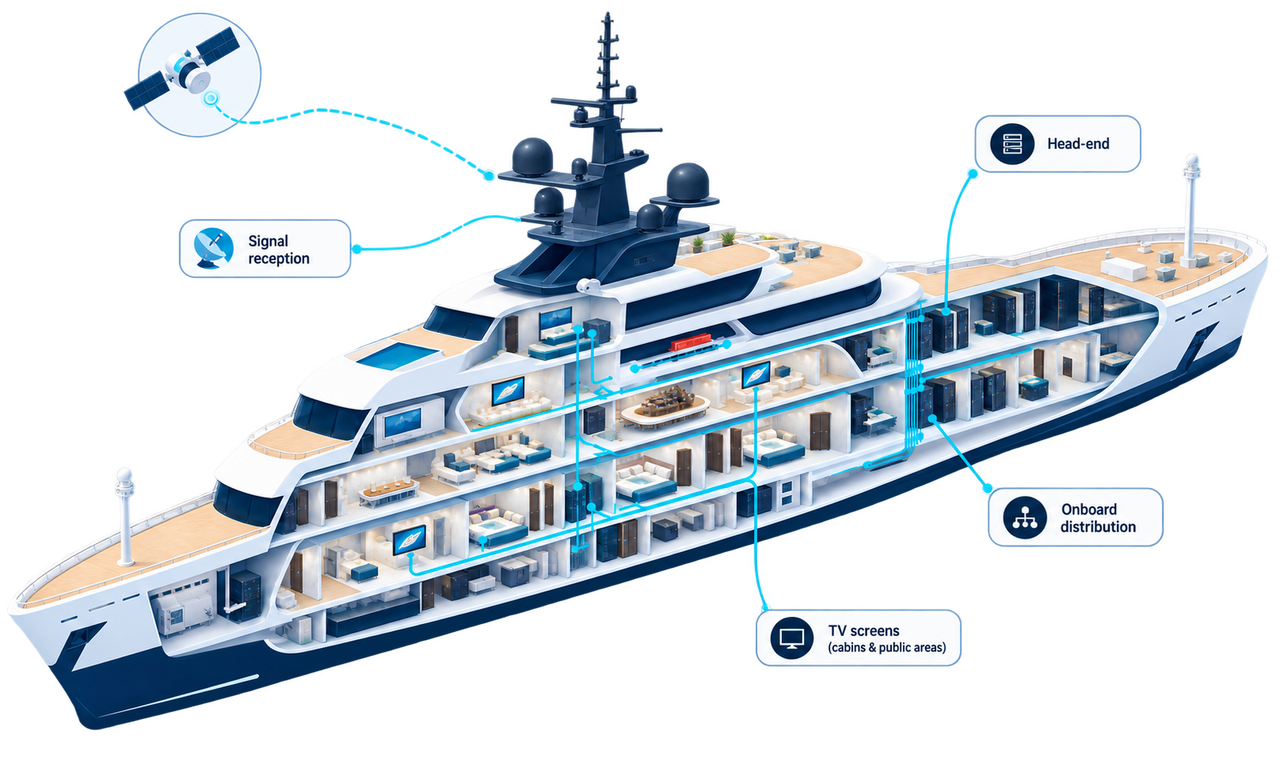
From the head-end, one incoming stream becomes many: cabin televisions, public-area screens, mess rooms. The vessel is not merely receiving a signal; it is deliberately redistributing it to its passengers. Under EU copyright principles, that redistribution is a separate act from reception. This is the principle the CJEU established for hotels in SGAE and has applied consistently since.
Why rights arise.
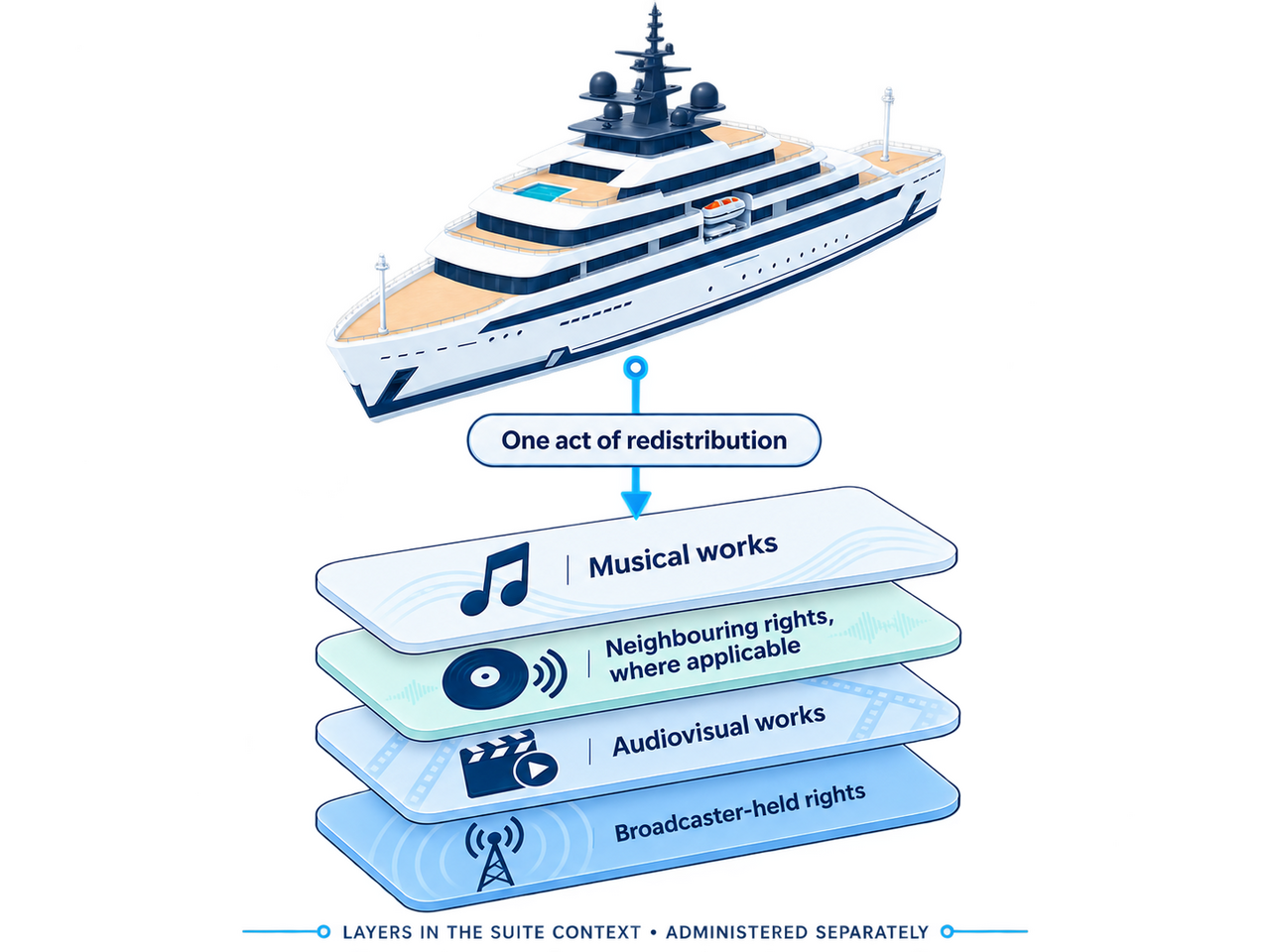
One act of redistribution can involve several layers of rights, owned or administered by different parties: musical works; neighbouring rights, where applicable; audiovisual works; and broadcaster-held rights. The layers overlap in the same content but are administered separately.
Who administers them.
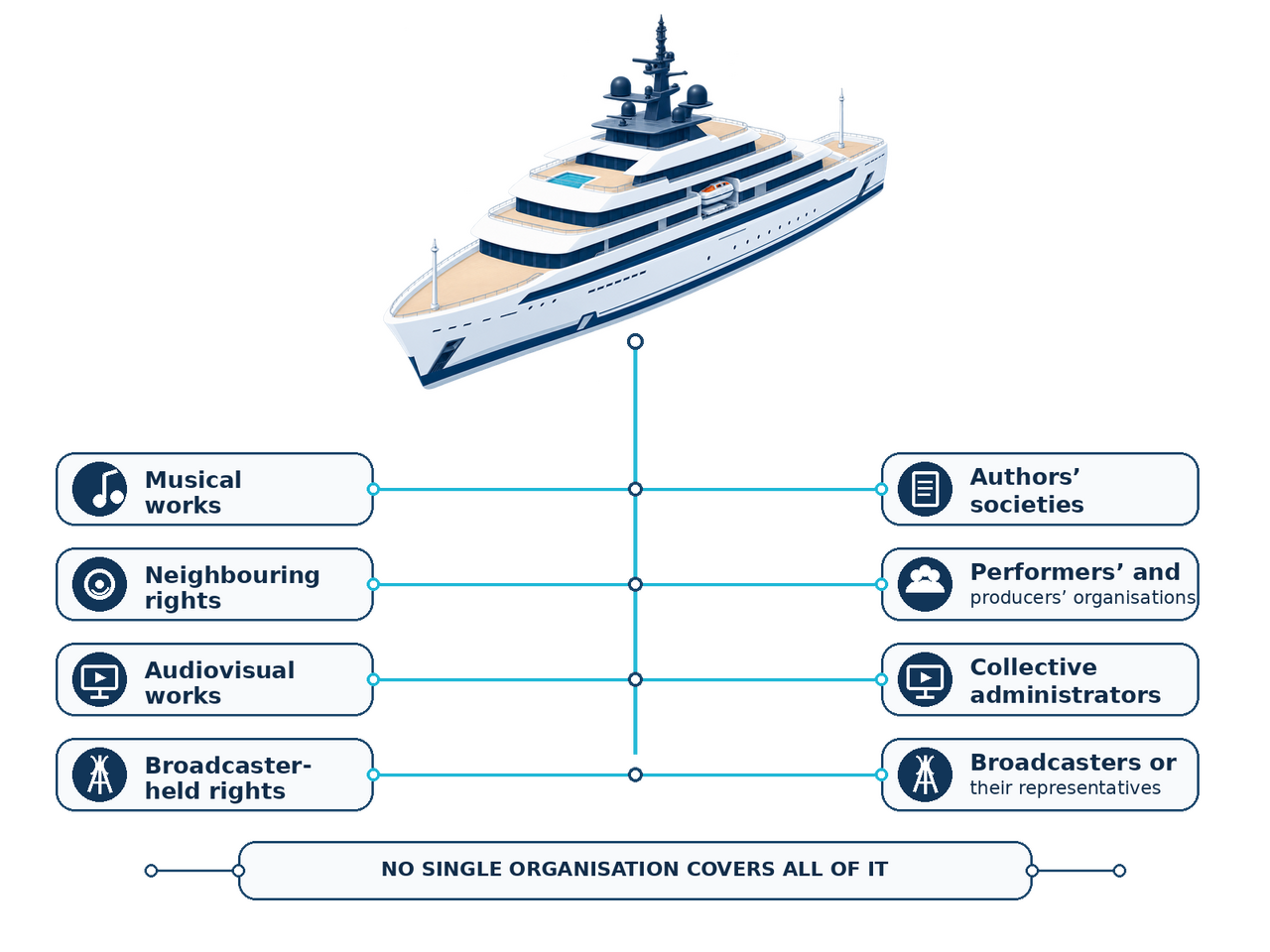
Administration is fragmented by design. Musical works sit with authors’ societies. Neighbouring rights sit with performers’ and producers’ organisations, territory by territory. Audiovisual retransmission rights sit with collective administrators. Broadcaster-held rights sit with the broadcasters or their representatives. No single organisation covers all of it.
Where the money goes
Licence fees collected under collective management do not stay with the organisations that collect them. After administration costs, they are distributed to the people behind the content: the producers, performers, authors, composers, and crews whose work fills the channels a vessel redistributes. For many of them, collective remuneration has become a material part of income in a period when per-stream revenue from digital platforms is minimal.
A vessel operator that licenses correctly is not paying a toll. It is participating in the mechanism by which the content it offers its passengers continues to be made.
Why maritime is different.
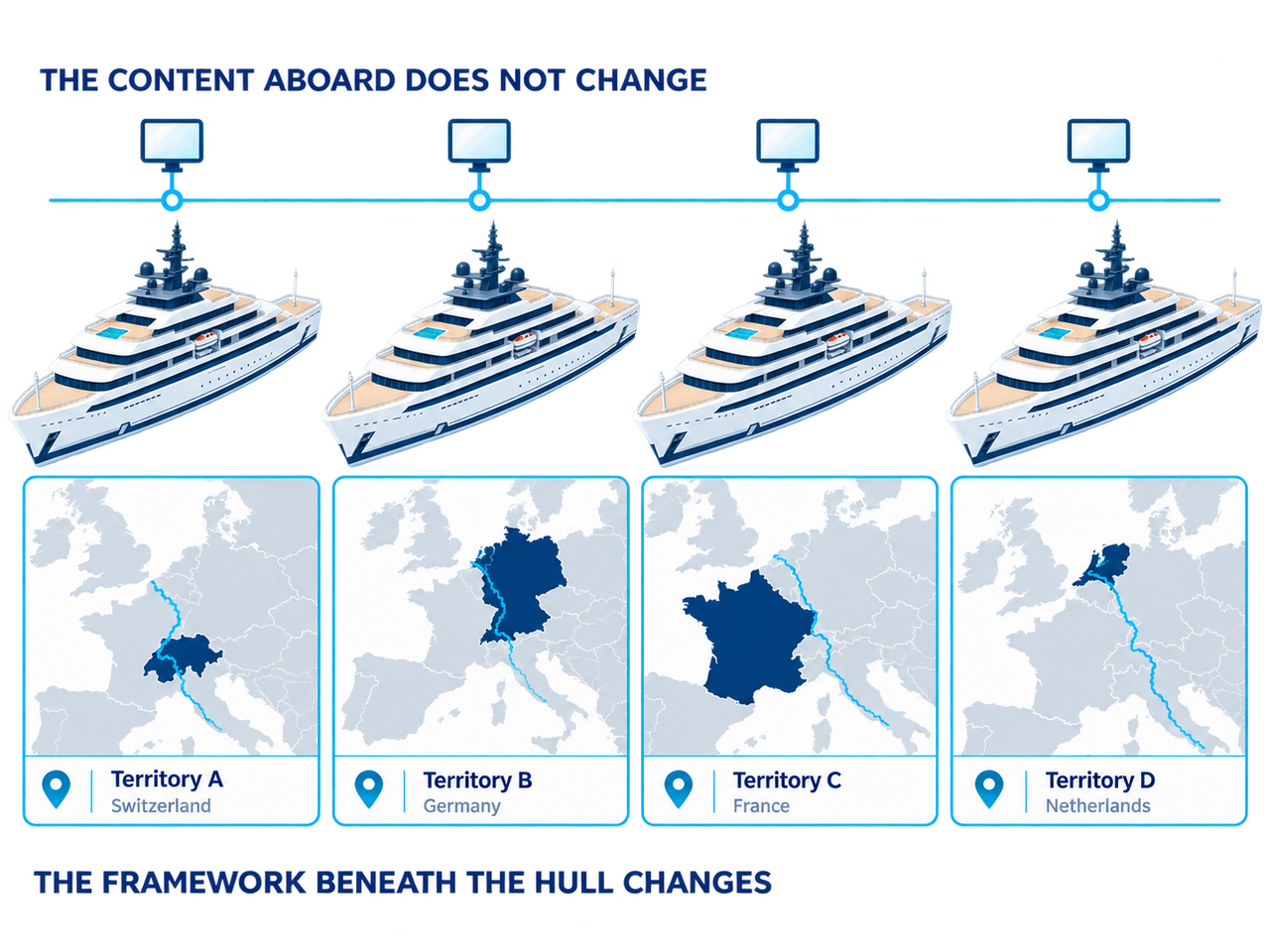
A hotel stays in one jurisdiction. A vessel does not. The content aboard remains unchanged while the applicable territorial framework changes beneath the hull. Redistribution taking place while the vessel operates within a jurisdiction engages that jurisdiction’s framework, and a non-EU flag does not by itself remove obligations arising from redistribution within an EU territory. The territorial framework for retransmission is set at EU level by Directive (EU) 2019/789 and national law.
Why the supplier chain may not have solved this.
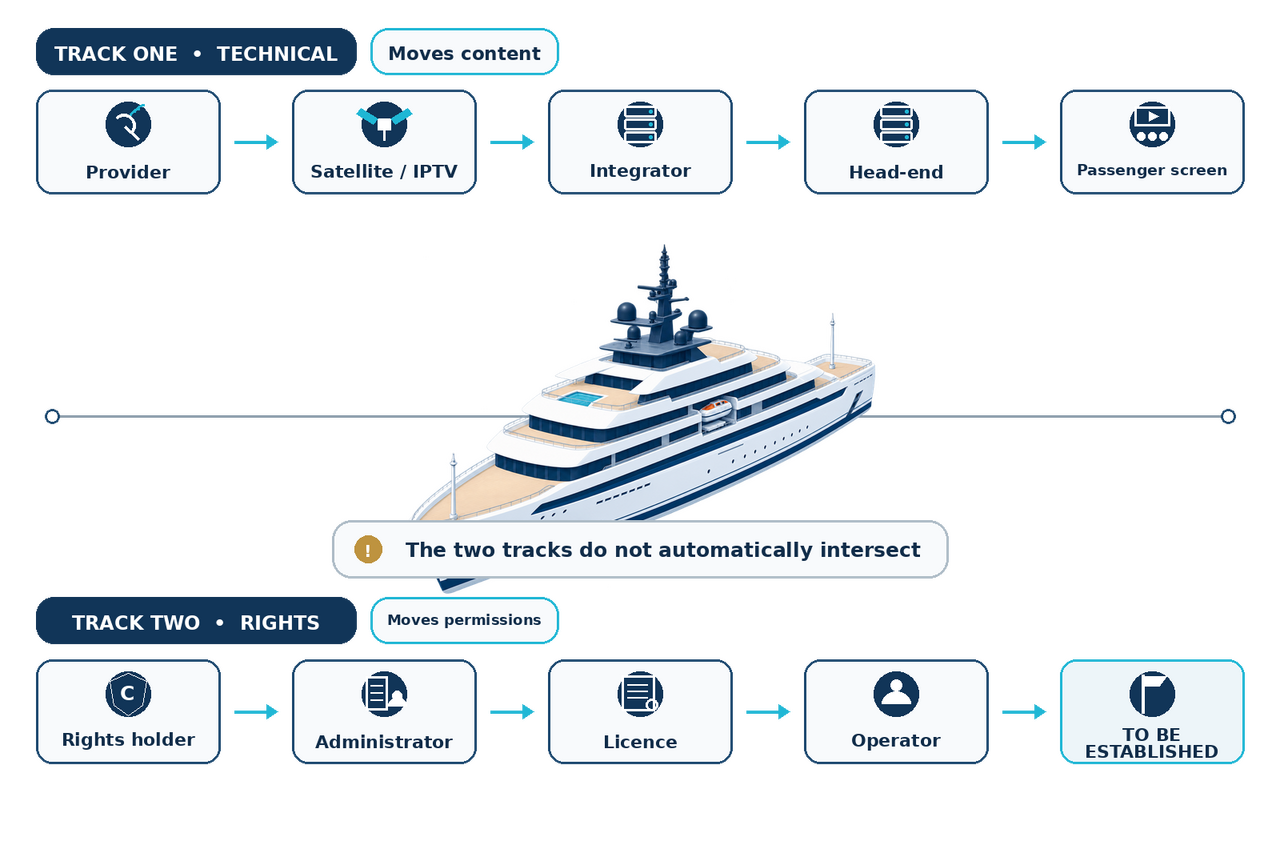
Two parallel tracks exist. The technical track moves content: provider, satellite or IPTV, integrator, head-end, screen. The rights track moves permissions: rights holder, administrator, licence, operator. The two tracks do not automatically intersect. The company supplying the signal is not necessarily the party clearing every onward redistribution right, and signal subscriptions generally do not by themselves establish that those rights have been cleared. Clara reviews the applicable agreements rather than assuming coverage either way.
Close
What follows from this is administration, not alarm. The applicable rights can be established, the existing coverage identified, and the gaps closed on known terms.
The full legal basis, with case citations, is documented here.
What applies to your vessel.
The intake conversation takes thirty minutes. Confidential, non-binding, and it obligates nothing further.
Book a confidential intake